
Skip to content
CV Carbon
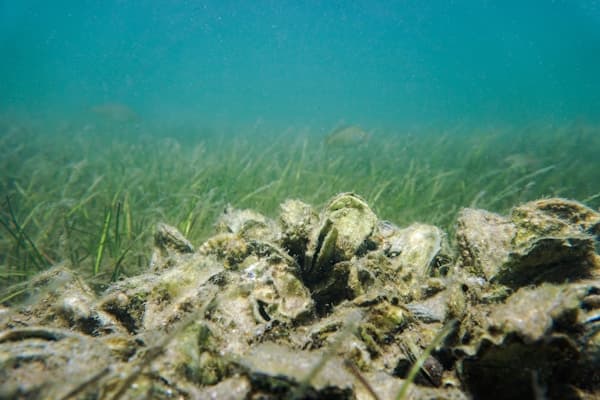
An oyster reef surrounded by seagrass in clear shallow water

Beyond Carbon

The other benefits of oysters
reach far beyond carbon

Oyster reefs deliver greater food web services per unit area than any other estuarine habitat — including salt marsh, sea grass meadows, or tidal flats.

higher net productivity than any other habitat type found in bays and estuaries, proven experimentally.
8–9×

higher net productivity than any other habitat type found in bays and estuaries, proven experimentally.

of additional fish and large mobile crustacean production created annually by 1 m² of restored reef.
260g

of additional fish and large mobile crustacean production created annually by 1 m² of restored reef.

Numerous scientific studies show that oysters provide immense services and benefits that reach far beyond their incredible ability to capture and store carbon. Oysters are ecosystem engineers that build biogenic structures which propagate dense assemblages of life.

Multiple studies have found that oyster reefs deliver greater food web services per unit area than any other estuarine habitat, including salt marsh, sea grass meadows, or tidal flats. Ecologists use the term productivity as the rate at which energy is added to the bodies of a group of organisms in the form of biomass.

The net productivity of oyster reefs has been experimentally proven to be at least eight to nine times higher than any other habitat type found in bays and estuaries.

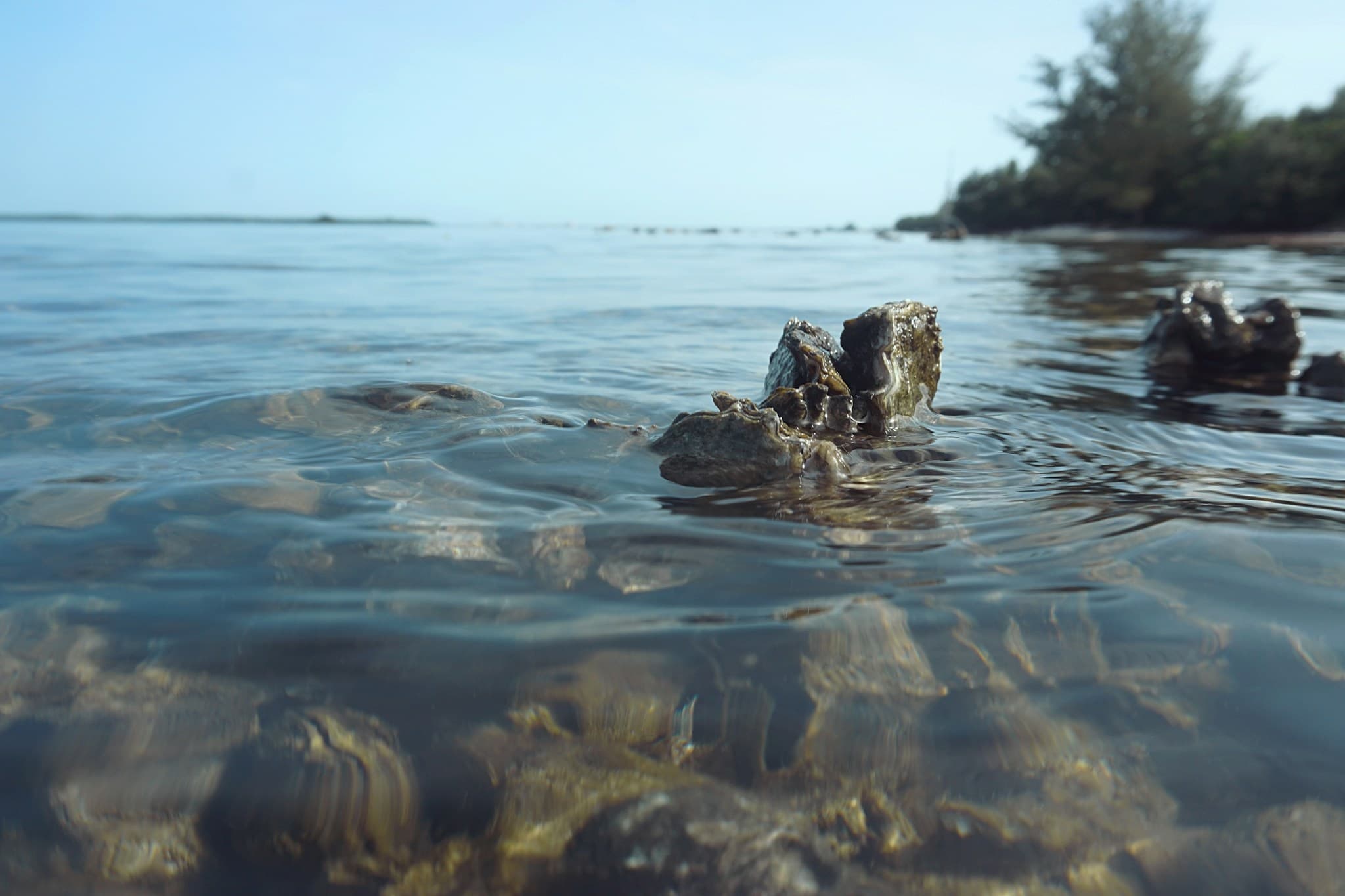
An oyster reef breaking the water's surface beside a mangrove shoreline
Reefs raise the productivity of every habitat adjacent to them.

Oyster Reefs

Six services a reef provides

Every one of these is delivered by the same structure that sequesters the carbon — which is why restoration pays a return no single metric can capture.

01

Habitat

Oyster reef provides habitat for numerous fish and decapod crustacean species that mediate ecosystem functioning and support vibrant fisheries.1 In a review of six studies containing quantitative measurements of abundances of fish and crustaceans on oyster reefs in the southeast United States, Peterson et al. estimated that 1 m² of restored oyster reef habitat creates an additional 260g of fish and large mobile crustacean production annually.2
02

Water Quality

Oysters improve water quality by reducing turbidity, driving denitrification, increasing benthic algal production, and removing bacterial biomass from the water column.3,4,5

They reduce turbidity by removing suspended particles from the water column and by reducing wave energies, which decreases the suspension of particles. They remove nitrogen in several ways: storing it in their tissues and shells, where it is physically removed from the water during harvest; excreting nitrogen-containing waste that is buried in sediments; and facilitating denitrification.6

03

Improves the Entire Ecosystem

Oyster reefs increase the productivity and health of adjacent habitats like salt marshes, sea grass meadows, mud flats, and mangroves.7

04

Prevents Shoreline Erosion

Reefs attenuate wave energy, which has been shown to reduce or prevent shoreline erosion and reduce impacts from coastal storms like hurricanes.8

05

Commercial Food Source

Oysters are a sustainable protein source for human consumption through commercial harvest from leased areas.

06

Recreational Opportunities

Oyster reefs provide opportunities for recreational oyster harvest, improved recreational fisheries, and wildlife viewing.

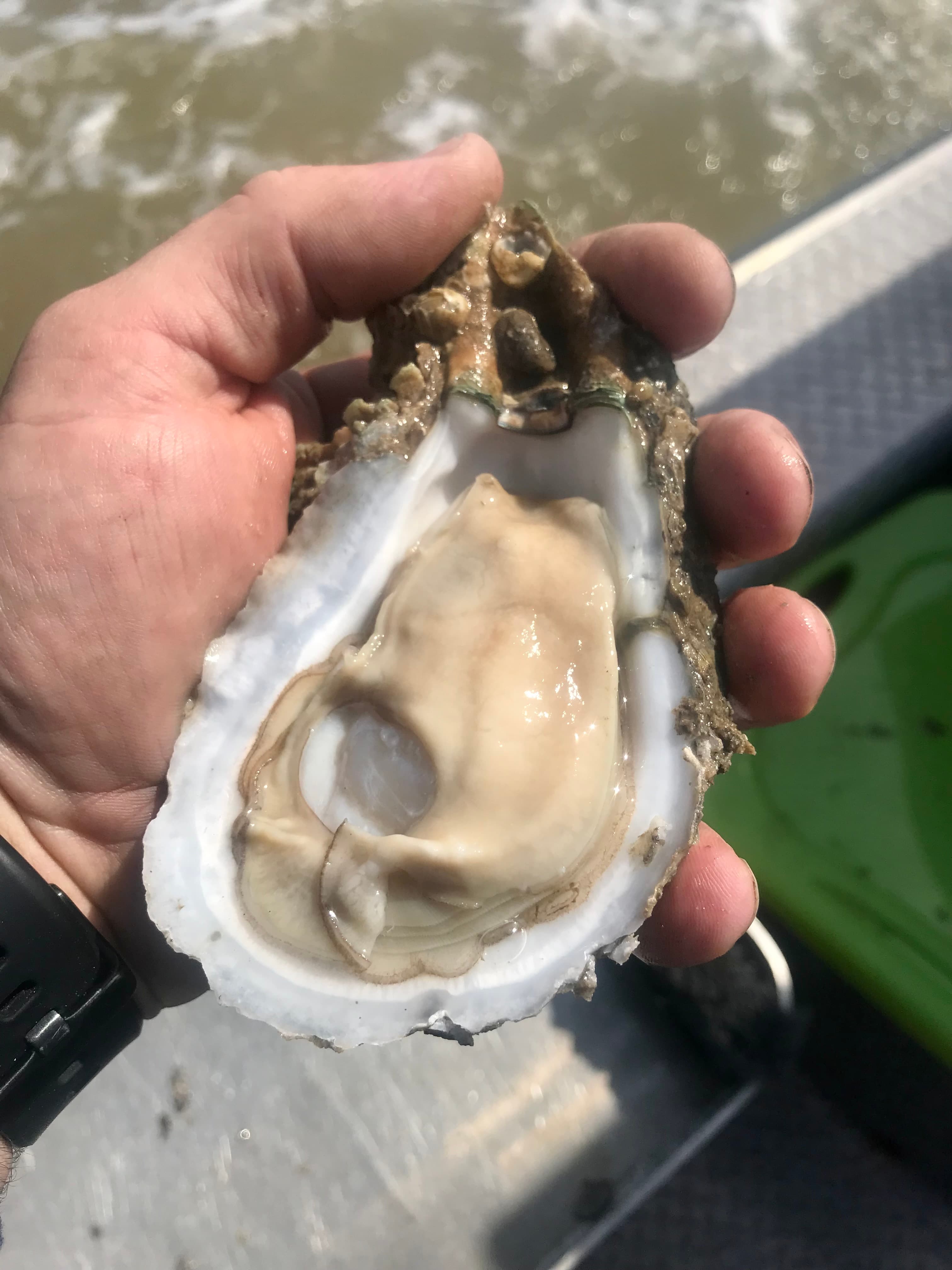
A freshly shucked oyster held in hand
A sustainable protein source, harvested from leased areas.
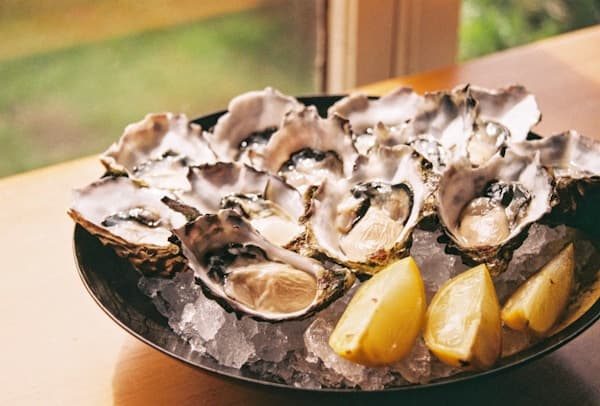
A plate of raw oysters served on ice with lemon
Commercial harvest keeps the industry — and the restoration — funded.
Sunrise over a calm Gulf shoreline
Reefs attenuate wave energy, protecting the shoreline behind them.

Literature Cited

  1. 1La Peyre, M.K., D. Aguilar Marshall, L.S. Miller, and A.T. Humphries. 2019. Oyster Reefs in Northern Gulf of Mexico Estuaries Harbor Diverse Fish and Decapod Crustacean Assemblages: A Meta-Synthesis. Front. Mar. Sci. 6:666. doi: 10.3389/fmars.2019.00666
  2. 2Peterson C.H., J.H. Grabowski, S.P. Powers. 2003. Estimated enhancement of fish production resulting from restoring oyster reef habitat: Quantitative valuation. Marine Ecology Progress Series 264: 249–264.
  3. 3Newell R.I.E., J.C. Cornwell, Owens M.S. 2002. Influence of simulated bivalve biodeposition and microphytobenthos on sediment nitrogen dynamics: A laboratory study. Limnology and Oceanography 47: 1367–1379.
  4. 4Piehler M.F., Smyth A.R. 2011. Habitat-specific distinctions in estuarine denitrification affect both ecosystem function and services. Ecosphere 2 (art. 12). doi:10.1890/ES10-00082.1
  5. 5Cressman K.A., M.H. Posey, M.A. Mallin, L.A. Leonard, T.D. Alphin. 2003. Effects of oyster reefs on water quality in a tidal creek estuary. Journal of Shellfish Research 22: 753–762.
  6. 6Carmichael, R.H., W. Walton, and H. Clark. 2012. Bivalve-Enhanced Nitrogen Removal from Coastal Estuaries. Canadian Journal of Fisheries and Aquatic Sciences 69(7): 1131–1149.
  7. 7Newell R.I.E., E.W. Koch. 2004. Modeling seagrass density and distribution in response to changes in turbidity stemming from bivalve filtration and seagrass sediment stabilization. Estuaries 27: 793–806.
  8. 8Warnell, K., R. Karasik, S. Mason, A. Zhao, S. Sharma, and C. Sandoval. 2020. Evidence Library for Oyster Reef Restoration in the Gulf of Mexico. NI R 20-04b. Durham, NC: Duke University.

Additional Literature Referenced

  • Grabowski, J.H., and C.H. Peterson. 2007. Restoring Oyster Reefs to Recover Ecosystem Services. In Theoretical Ecology Series: Ecosystem Engineers, K. Cuddington, J.E. Byers, W.G. Wilson and A. Hastings, eds. Amsterdam: Academic Press, 281–298.
  • Grabowski, J.H., R.D. Brumbaugh, R.F. Conrad, A.G. Keeler, J.J. Opaluch, C.H. Peterson. 2012. “Economic Valuation of Ecosystem Services Provided by Oyster Reefs.” Bioscience; Oxford 62(10): 900–909.
  • Newell R.I.E. 1988. Ecological changes in Chesapeake Bay: Are they the result of overharvesting the American oyster, Crassostrea virginica? Pages 536–546 in Lynch M.P., Krome E.C., eds. Understanding the Estuary: Advances in Chesapeake Bay Research, vol. 129. Chesapeake Bay Research Consortium.

Next

Contact Us

Continue