
Historical Impact
The impact of oyster
shell mining
Also known as the mud shell industry - six decades of extraction that the reefs could not recover from on their own.
Shell mining had obvious direct negative impacts on oyster reefs, but there were also indirect effects that had long-term consequences and prevented ecological recovery.
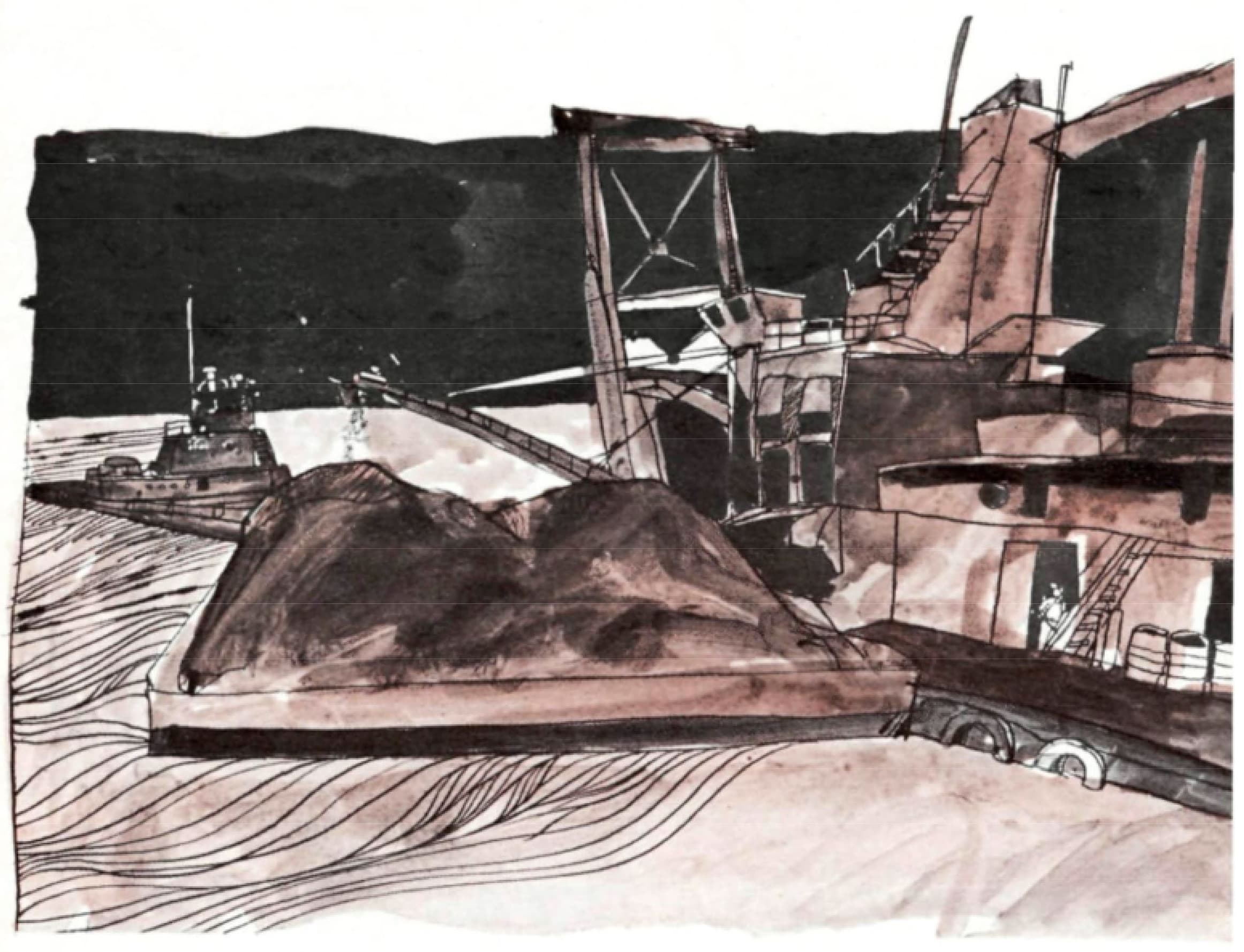
Multiple accounts from Texas document shell mining that resulted in large pits — sometimes up to 80 feet deep in a normally shallow-water estuary.1 Unnaturally deep holes in estuaries cause water quality issues ranging from low dissolved oxygen to potentially toxic levels of H₂S.
Additionally, shell mining has been shown to alter freshwater flows, create hydrodynamic changes, increase wave energy, and increase erosion. The damage was not only to the reef that was removed, but to the conditions any future reef would need in order to grow back.
1880 - 1971
Ninety years of extraction
In his report published in 1965, Edwin Doran, Jr. traced how a shovel-and-wheelbarrow operation on an exposed reef became one of the largest sources of industrial aggregate on the Gulf Coast.
- 1880
Shovel and wheelbarrow
A recorded account from a shell mining company states that the earliest mining efforts in Texas occurred on July 16, 1880, when a sloop sailed from Galveston Bay to West Bay and began extracting oyster shell from an exposed reef by hand.
- 1905
Mechanization arrives
The first account of a mechanical dredge used in the shell mining industry. A hydraulic dredge followed in 1912 - and the scale of extraction changed permanently.
- 1916
Shell becomes cement
The first intensive commercial use of oyster shell in Texas: a source of lime for a cement plant constructed in Houston. By 1951, four cement companies were consuming two million cubic yards of shell a year.
- 1941
Industrial demand intensifies
After the construction of the Dow magnesium plant, lime produced from roughly a million cubic yards of shell annually was mixed with sea water to form magnesium hydroxide, and ultimately metallic magnesium.
- 1955
Shell roads
Of more than ten million cubic yards of shell produced that year, an estimated 65% went to industry and about 28% into road construction - a belt of shell roads extending fifty to seventy miles inland from the coast.
- 1971
The tally
Combining figures from several historic reports, shell mining removed approximately 300 million cubic yards of oyster shell from Texas bays between 1912 and 1971. The true volume was likely larger - the reports cover a limited number of companies.
By combining the figures from several historic reports, shell mining activities removed approximately 300 million cubic yards of oyster shell from Texas bays between 1912 and 1971. It is likely that the actual volume was larger, because the reports cited indicate the figures are based on data from a limited number of companies.
From the Archive
What the industry left behind
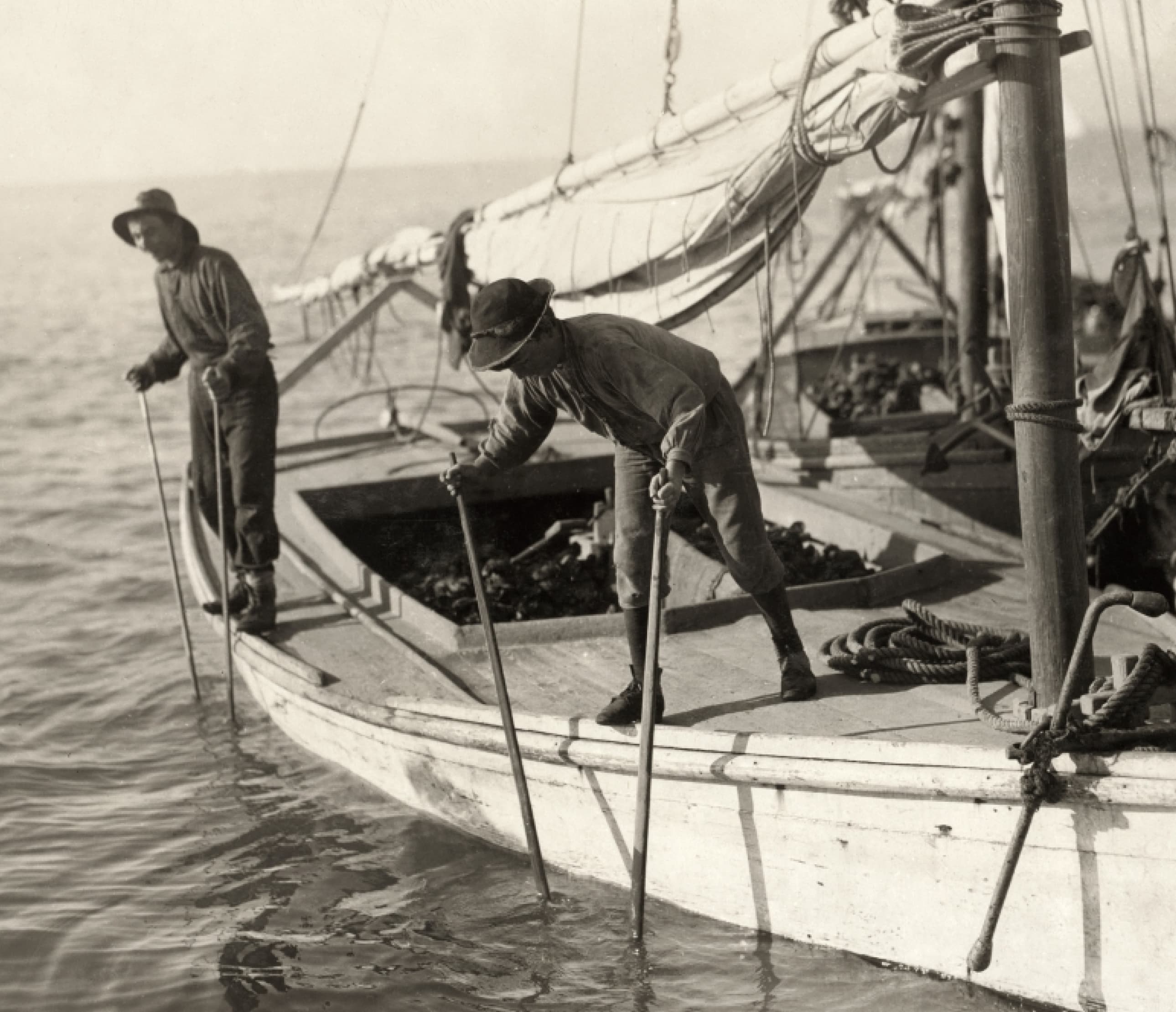
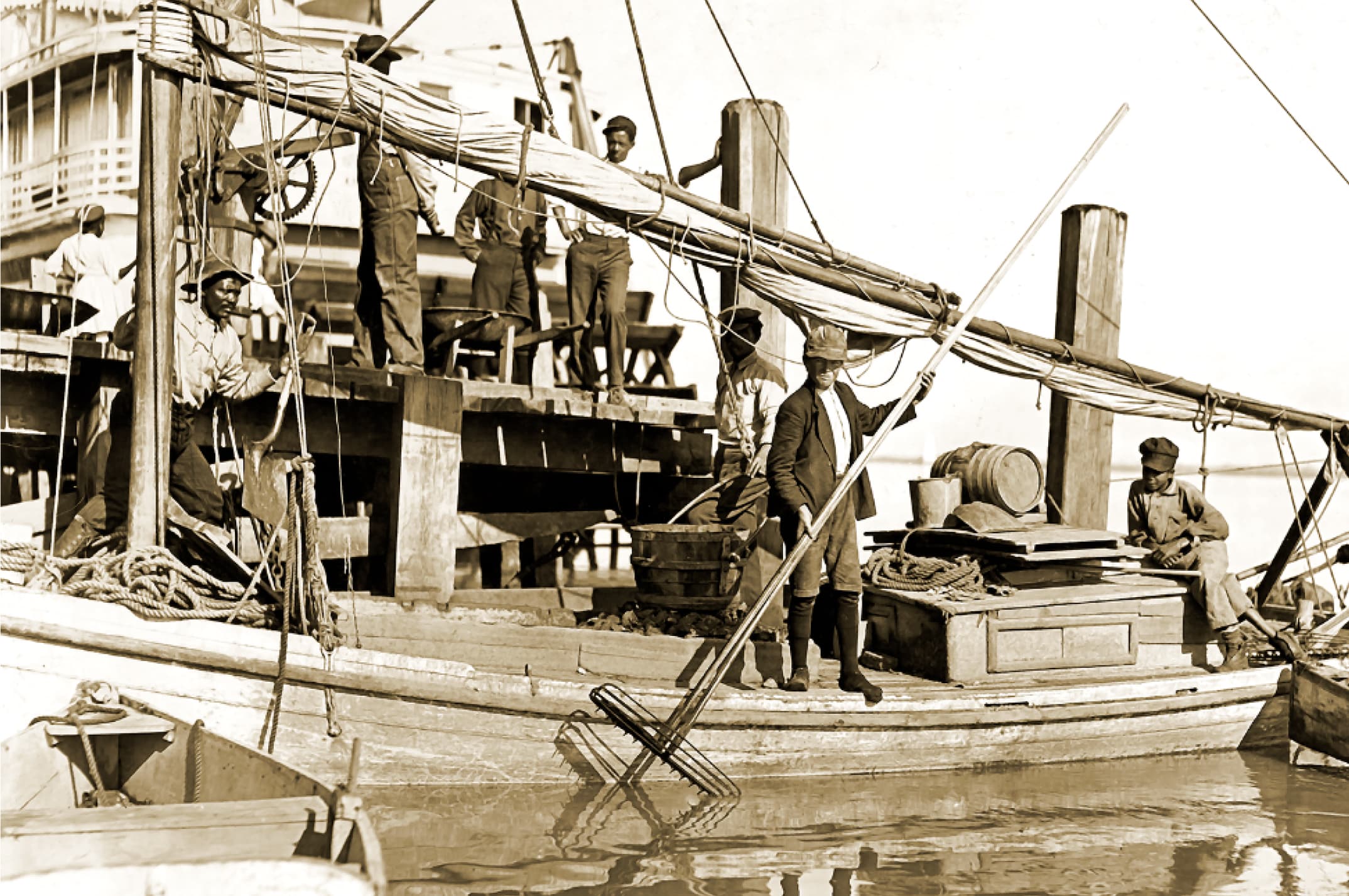
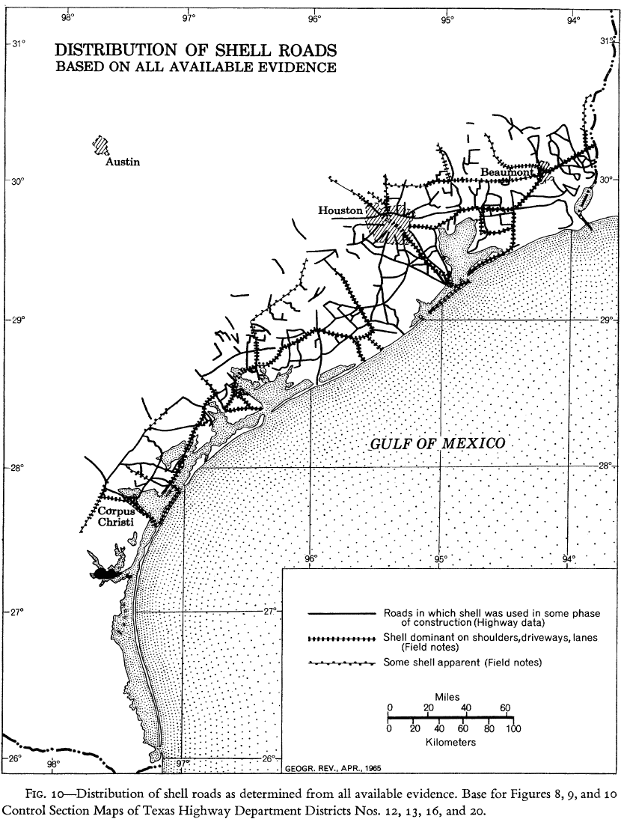
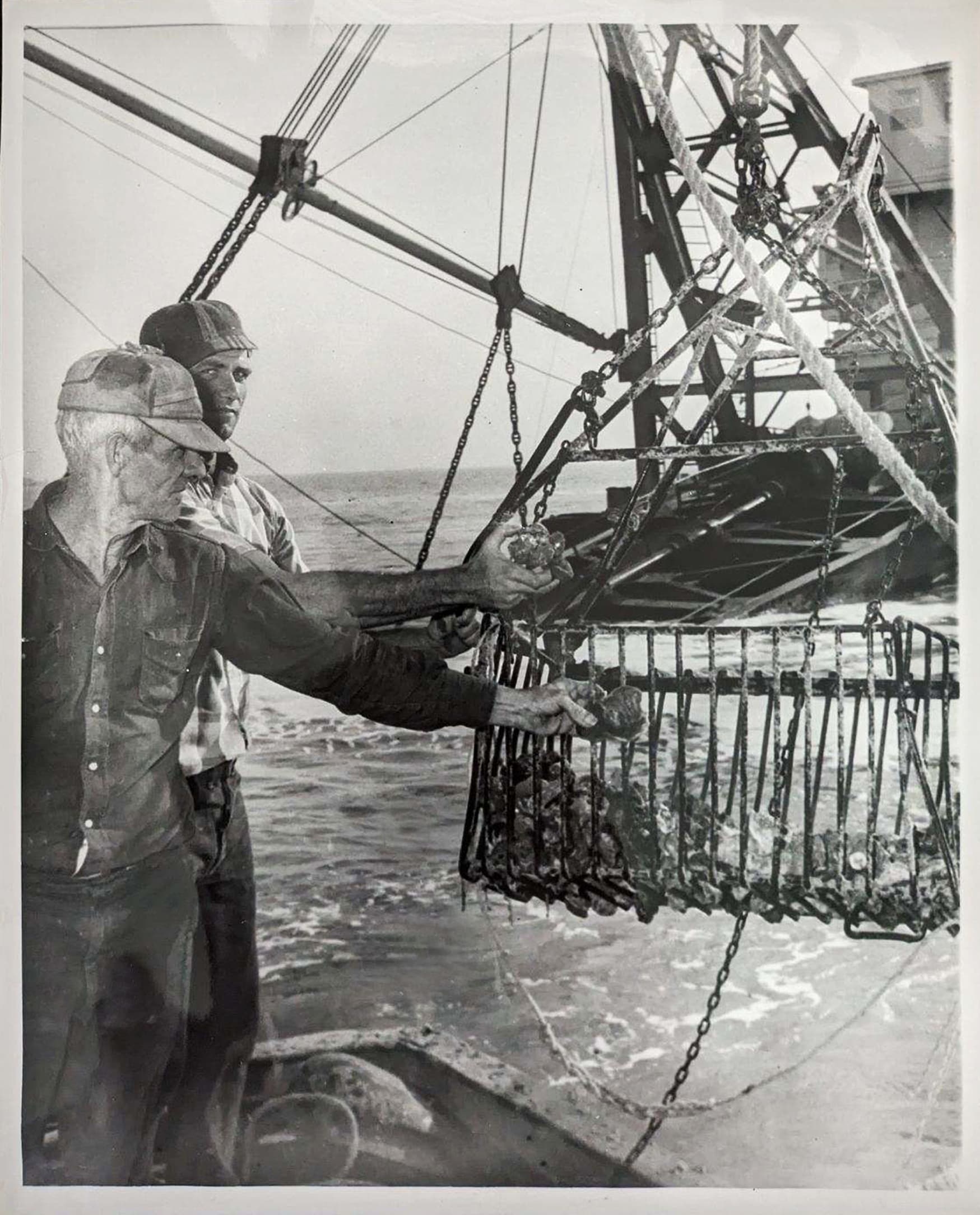
Photo credit, page top:Oystermen in East Galveston Bay of Texas have just picked up this basket of live oysters just 20 feet from the cutter blade of the giant shell dredge shown in the background. The dredge is destroying this 25–30 acre Hargfield Reef, which produces a livelihood for commercial fishermen and provides a prime fishing spot for sports fishermen.
Literature Cited
- 1Hensen, M.S. 1993. The History of Galveston Bay Resource Utilization. The Galveston Bay National Estuary Program. Publication GBNEP-39.
- 2Oyster sloops were a traditional sail-powered oyster-dredging boat.
- 3Gaines, F.L. 1965. What the shell industry means to Texas. Report prepared by: Joint Organizations for Business Survival. Texas Avenue Building, Houston, Texas.
- 4Kerr, A. 1967. The Texas reef shell industry. Bureau of Business Research. University of Texas at Austin. Industry Series No. 11.
- 5A. Doran Jr., E. 1965. Shell Roads in Texas. Geographical Review. Apr. 1965, Vol. 55, No. 2, pp. 223–240. B. Kibbe, I.P. 1898. Report on the coast fisheries of Texas. Austin, TX: Von Boeckmann, Moore & Schutze. C. Environmental Impact Assessment of shell dredging in San Antonio Bay, Texas. Vol. 1. Prepared by Texas A&M Research Foundation for the U.S. Army Engineer District, Galveston. September 1973.
Next
Restoring Oyster Habitat